
You have an outdated webbrowser. The website might not work correctly.
The bunka knife is a Japanese kitchen knife with a striking blade shape, mainly due to its sharp, distinctive tip. The knife is just as versatile as a santoku, and suitable for cutting fish, meat, vegetables and herbs. Thanks to the tip, a bunka is better suited to precise cutting work. As you would expect from a Japanese knife, a bunka has a razor-sharp blade that provides a fine, direct cutting experience. Are you looking for a versatile kitchen knife with an iconic Japanese look? Then a Japanese bunka knife is an excellent choice.
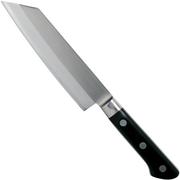


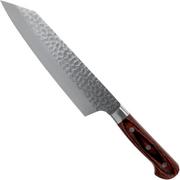

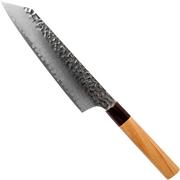

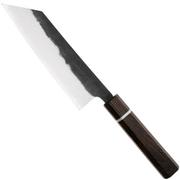

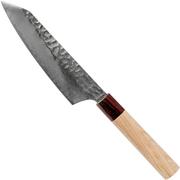

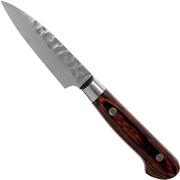

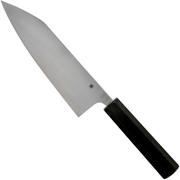

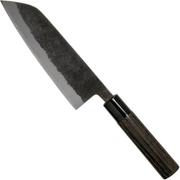


The bunka knife is particularly suitable for precise cutting work. The tip helps you cut small ingredients such as onions or shallots quickly and accurately. The tip also comes fully into its own when push-cutting or quickly and finely chopping vegetables and herbs. It is also ideal for detail work, such as ultra-thin vegetable strips or decorative cuts in radishes, cucumbers or carrots. When preparing meat and fish, the pointed tip also makes it easy to get underneath skin and tendons.
When choosing a bunka knife, it is important to decide what you are going to use it for, and balance and ergonomics also play a role. Naturally, the handle must feel comfortable in the hand. There are two types of handle styles: the traditional Wa-style - usually octagonal - D-shaped or oval, and the Western version. Traditional Wa-style handles are often lightweight and relatively slim. That makes them comfortable for fast cutting work and longer cutting tasks. Western handles are somewhat larger and heavier. Ideal if you have large hands.
The choice of steel is also important. Stainless steel is easy to maintain and suitable for daily use. Carbon steel is hard and can be ground extra thin. That provides excellent sharpness and a fine cutting experience. However, the edge is more prone to chipping, and the material requires more maintenance to prevent rust. A bunka knife made from damascus steel is a real eye-catcher in the kitchen. It combines the characteristic shape of the bunka with a beautiful damascus pattern.
Bunkas and santokus are both Japanese kitchen knives that offer versatility and precision. They have a similar blade length and are suitable for meat, fish and vegetables. Both knives feel comfortable in the hand and make precise cutting work easy. The main difference lies in the shape of the blade: the bunka knife has a distinctive tip, also known as a kengata tip. This is ideal for detail work and small ingredients. A santoku has a rounded tip and is particularly suitable for cutting in one smooth motion. In addition, a bunka, like a santoku, is originally always double-edged. If you need a lot of precision, choose bunka, and for fast, everyday cutting, a santoku is ideal.
Discover all Japanese knives here if you want to expand your range of high-quality kitchen knives.


