Grain sizes for whetstones
Whetstones - also called sharpening stones and often unjustifiably confused with water stones - are available with many different grain sizes. The state of your knife depends which stone you need. What is clear though is that you always need multiple whetstones to sharpen your knife. Here the following applies: the blunter your edge, the more stones you will need and the lower the grain size will be with which you start the sharpening process. A lower grain size namely represents a coarser stone, and a high grain a fine stone. Finally, you can polish your knife with the leather strop.
What is a whetstone comprised of?
A one-sided sharpening stone is often comprised of sharpening grains and a cohesive agent. Sometimes the sharpening stone is fixed to a non-slip surface. Slate, for example. The sharpening grains can be made from different materials. Ceramics, aluminium oxide and silicon carbide are the most common versions when it comes to synthetic whetstones. Natural stones are mostly comprised of garnets or novaculite, in the case of Arkansas stones.
The second 'component' of a whetstone is, as mentioned before, the cohesive agent that holds the grains together. This determines the hardness of the stone and how coarse or fine it is. Synthetic resin is often used as a cohesive agent. But also magnesium and ceramic bound whetstones are popular.
Types of whetstones
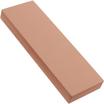
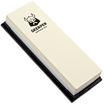
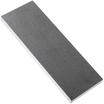
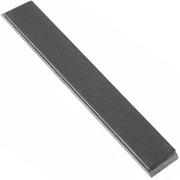
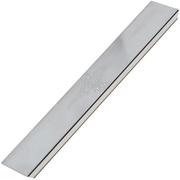
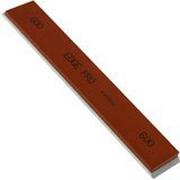
Whetstones come in all shapes and sizes. There are, for instance, Japanese whetstones, diamond-coated sharpening stones, ceramic whetstones, natural sharpening stones, combination sharpening stones and many more. There are also complete sharpening stone sets to make sure you immediately get all grain sizes you need.