
You have an outdated webbrowser. The website might not work correctly.
An electric knife sharpener is the ideal assistant for every cooking enthusiast. Have you just started cooking, only to realize your chef’s knife isn’t cutting as well as it should? Run the knife through the various slots of your sharpening machine a few times and you'll be ready to go again in no time!


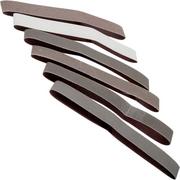

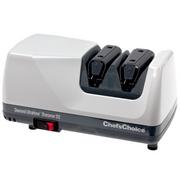

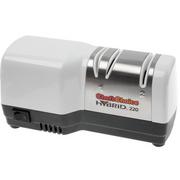

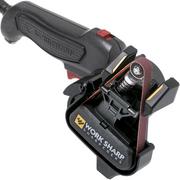

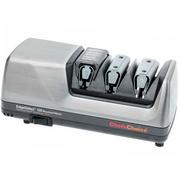

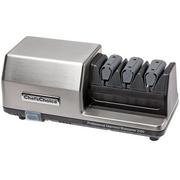

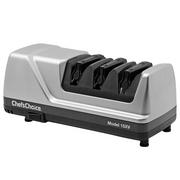


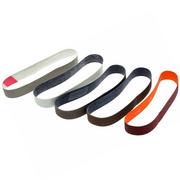

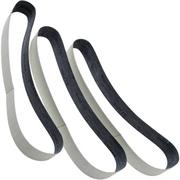

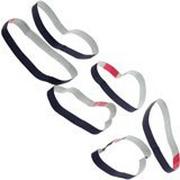

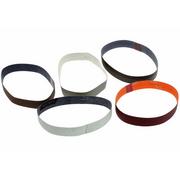

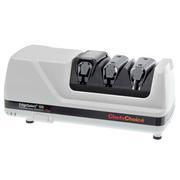

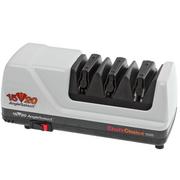


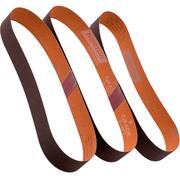

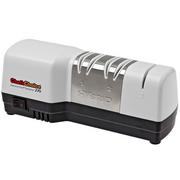


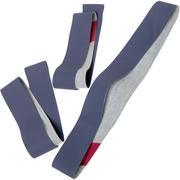

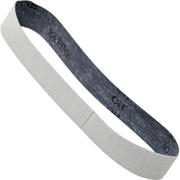


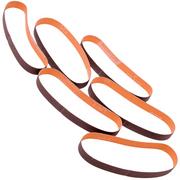

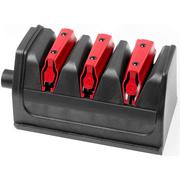

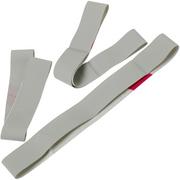

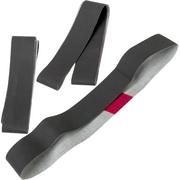

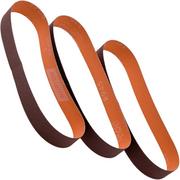


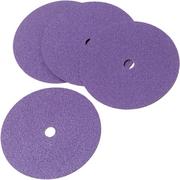


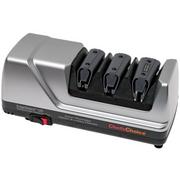

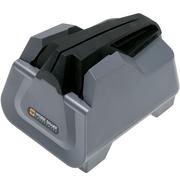

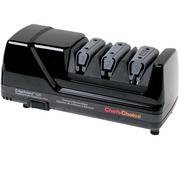


The speed at which you sharpen your knives is considered to be a big advantage of electric sharpeners. Compared to sharpening stones, you'll barely have any clean-up after sharpening. Electric sharpeners are also extremely easy to use. You place the heel of your knife in the slot and make a cutting movement - without applying pressure - until you reach the tip of the knife. Repeat this five to ten times.
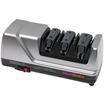
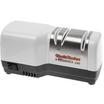
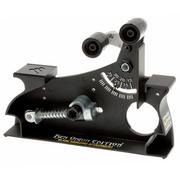
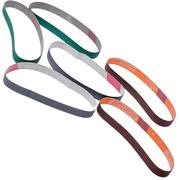
Check out the American classics from Chef'sChoice and Work Sharp. Chef'sChoice machines sharpen using a phased process via two or three slots with increasing grit sizes, while Work Sharp machines are more similar to belt sharpeners that give knives a convex-like fold for a different sharpening style.
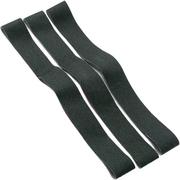
Most sharpening machines have two or three slots, with sharpening stones, belts or discs in different grain sizes. You usually start with a coarser grain, after which ceramic or diamond-coated discs, belts or stones do the fine finishing. Within a minute, your knife will be ready for use again.
When using an electric sharpener, you should always sharpen from the same angle. Some sharpeners offer a choice between two different angles, for example 15 degrees for Japanese knives and 20 degrees for Western knives. The space between the slots is suitable for sharpening standard kitchen and pocket knives. However, if you want to sharpen cleavers or axes, for example, you should choose an electric sharpener that is specifically designed for this purpose.
After sharpening, sharpening particles may remain between the slots of some systems, which can cause scratches on your knife. Therefore, cover the blade (not the cutting edge) with tape.